




















Dearest readers,
Now we're talkin'...or emailing. My inbox has never had so many responses to a column that it outnumbered offers for male enhancement or requests for help on a Nigerian financial crisis. But this last column in which I talked about global warming and the Z-squared solution [Solutions to Global Warming - in a Nutshell, Sept 16th] sparked a thoughtful dialogue from many notable environmentalists who rightly pointed out the other major underlying problem that I didn't address-population growth.
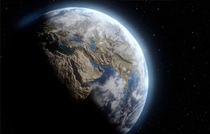
I wrote in my last column that all the challenges to our modern society-from poverty and wars to environmental destruction and starvation-are rooted in one source: the fact that we are living beyond the carrying capacity of the planet. I offered a packaged solution of Zero Waste and Zero Emission strategies, or "Z squared." As many of you responded, this paired solution effectively addresses one dimension of the problem: our growing rate of consumption. Still to be addressed is the other major factor: our exponentially growing population. Certainly our finite planet cannot sustain growth in either of these areas, let alone both.
Here's the challenge (get ready for the scary numbers): According to the US Census Bureau, our current world population is now over 6.5 billion. That number is increasing by 77.2 million every year, more than 211,000 people a day. In the five minutes it will take you to read this column, 735 additional people will be added to our population (that's net growth).
The world population is projected to grow from the 6 billion back in 1999 to 9 billion by 2042, an increase of 50 percent over only 43 years. The good news is population growth has slowed in most areas around world but even a one percent growth rate is not sustainable because it means the population will double every 70 years.
Often when we discuss growing population problems, developing nations are the focus because of their high birth rates. But according to Al Bartlett, a University of Colorado physics professor emeritus who has spoken prolifically since 1969 on the topic of population growth, the world's worst population problem is right here in the United States. This is because we live at the world's highest rate of per capita resource consumption.
According to Professor Bartlett, it is estimated that a person added to the population of the United States will have 30 or more times the impact on world resources than a person added to the population of a developing nation. When you consider that people in underdeveloped countries seek a material standard of living that is more like ours, it's clear that we have the responsibility to set a different example, both in consumption and in population.
Our hope lies in a growing understanding and frank discussion of population concerns on the grassroots level and in leaders who will recognize that population growth and our systems of consumption are the major problems facing the U.S. and will initiate a national dialogue and plan of action on these issues. As individuals, our personal choices should reflect these goals of a sustainable population level and a Z-squared approach to resource use. Learn more about population issues from the Population Reference Bureau, the Population Coalition or look for opportunities to hear our local expert Al Bartlett speak on the issue.
Sometimes the news isn't positive, but it's critical to know what we're facing so we can create the change we need. We are facing a challenge unlike any generation preceding us, but I see us as a society increasingly waking up and stepping up to meet the needs of our children and of our planet for generations to come. I am more hopeful than ever as I see more awareness, discussion and positive action than I've seen in the 20 years I've spent working on these issues.
In an effort to generate national and international action, I will be taking a sabbatical from this column until early '07 so that I can raise funds to create a video/film series on the problems and the Z-squared solutions. In the meantime, let's keep that chatter going. Keep sending me emails and we'll meet here again next year, same time, same place.