













Collection of Unusual Materials

CHaRM: Pioneering the Recovery of New Materials
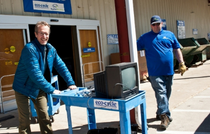
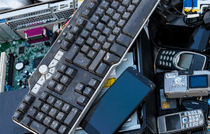
You know what to do with your bottles, cans, newspaper, etc., but what does a dedicated recycler do with items like electronics, textiles, plastic bags, and Styrofoam? Our modern waste stream is increasingly comprised of products for which there is no collection or recycling system in place. Without the infrastructure to handle these materials, they remain not only a barrier to recovering all waste, but many of them pose significant threats to our health and environment if landfilled or incinerated. In particular, electronic scrap such as computers, TV's, electronic games, PDA's, etc. contain lead, mercury, and other heavy metals which can leak into the groundwater when landfilled or be emitted into the air when incinerated.

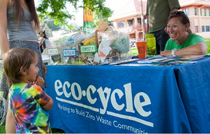
Seeking a solution to this problem, Eco-Cycle created the Center for Hard-to-Recycle Materials (CHaRM) in November, 2001. Just as we searched for and found markets in 1976 to buy the bottles, cans and paper we collected at the curb, the CHaRM has been searching for and even creating markets for the hard-to-recycle materials in our waste stream. As the CHaRM is the only facility of its kind in the state and one of only a very small handful in the country, we truly are starting at the very beginning with brand new markets. We have been successful in meeting this challenge by finding markets for athletic shoes, books, plastic bags, and a number of electronic products. It is our goal to add one new material each year.

Also uniquely challenging to this category of materials is that in many cases there may never be a profitable market based solely on supply and demand. Despite the high price that you paid for your computer, for instance, the fact is that once it is more than a few years old there will be a cost to recycle it responsibly. Currently, you, the City of Boulder, and Eco-Cycle are paying that cost when you bring us an electronic item. But Eco-Cycle is joining other environmental groups in raising the question: shouldn’t manufacturers and retailers take some of the responsibility for disposing of the products they produce and distribute? In the concept of Extended Producer Responsibility (EPR), manufacturers are given responsibility for the waste because only they have the ability to reduce that waste by planning for ease of recycling and greater longevity right on the design table.

At the CHaRM, we have created a simple example of how EPR can work locally. The Daily Camera wanted to support a recycling system to recover the thousands of plastic newspaper sleeves they distribute to their subscribers each year and so became a funder for the CHaRM, financially supporting the infrastructure to enable their customers to recycle their product. It is our goal to take that concept to other industries such as the manufacturers and retailers of electronics.

Another necessary component of Zero Waste that Eco-Cycle addresses with the CHaRM is assuring that these new markets we are creating don’t just become a waste or unfair labor problem somewhere else in the world. A coalition of environmental and social justice groups organized the Computer Take Back Campaign two years ago because of the suddenly huge problem of “recycled” computers ending up in China where the precious metals are crudely smelted out, while the rest of the computer is burned in open fires or dumped in rivers. Eco-Cycle has aligned itself with the Campaign’s “Pledge of True Stewardship,” which asks recyclers to pledge not to ship whole electronic components overseas.

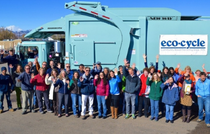
The new CHaRM facility has also meant new local jobs. Since launching this program, Eco-Cycle has hired three new staff members, as well as a crew of developmentally-disabled adults to shear book bindings.

Finally, the CHaRM allows other businesses to move toward Zero Waste by giving them an outlet for recovering more materials out of their waste stream. Organizations like Boulder Community Hospital and the Boulder Valley School District have utilized the CHaRM extensively to reduce their waste volume.

The CHaRM is the first of its kind, but it will likely soon be one of many, serving as a model for diverting a significant part of the waste stream, engaging producer responsibility, and keeping toxic materials out of our environment.

For a complete look at Eco-Cycle's vision for making our community a Zero Waste model for the world, click here.


Around the World Examples

Kirkland, Washington: Along with all the traditional recyclables, this curbside program also collects electronics, usable clothing, and food scraps. Residents receive two-gallon kitchen waste buckets that are emptied into larger yard/food waste carts. Small electronics and usable clothing are placed out in plastic bags while larger electronics are set next to the recycling bin. Kirkland also collects uncontaminated used motor oil at the curb.

WEEE directive: The EU embraced Extended Producer Responsibilty in January 2003 with its adaptation of the Waste Electrical and Electronic Equipment (WEEE) Directive. This legislation sets targets for collection and recycling of WEEE and places the financial responsibility for treatment on the shoulders of the producers. The accompanying legislation, the Restriction on Hazardous Substances, bans the use of heavy metals and brominated fire retardants in electronic and electrical equipment by mid-2006.

California: California has become the first state to pass a law requiring retailers to collect a fee on computer monitors and televisions. The fees range from $6-$10 and will be used to fund the collection and recycling of these materials. The legislation also holds manufacturers liable for phasing out the use of hazardous materials in their products.

Japan: A recycling law passed in October 2003 instructs computer manufacturers to place a recycling symbol on almost 98% of Japan’s PC’s. Consumers can take labeled PC’s to their local post office to be recycled free of charge.