














Why Recycling Looks So Different Across the US
Recycling can look completely different depending on where you live—but in some places, that is starting to change. States like Colorado are launching a precedent-setting policy that shows what universal, equitable recycling access can look like.
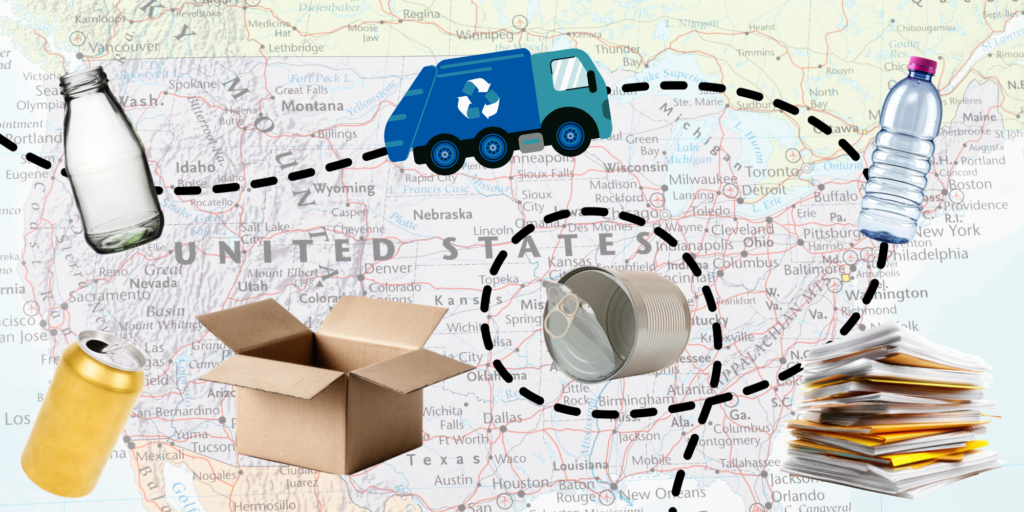
Across states and thousands of highway miles, trash cans are easy to find. Recycling bins are not.
Recycling is promoted as a shared civic responsibility. But the infrastructure tells a different story. In many places, access to recycling remains inconsistent and fragmented. While recycling feels like a basic public service, in much of the United States, whether something can be recycled often depends less on your intention and more on your location.
A Patchwork Recycling System
The US has no federal recycling program, no national list of universally accepted materials, no regulations around the use of the recycling symbol, and no guarantee of recycling access. Whether a recycling program exists—and what you can actually put in the bin—is determined locally.
In Boulder County, for example, the Cities of Boulder and Longmont have Zero Waste ordinances requiring recycling, compost, and trash service for every home and business. Residents recycle widely, and the system is designed with sustainability and strong end-markets in mind. But drive two hours south to Colorado Springs, and you’ll find there is no local recycling ordinance or municipal curbside recycling program. If you want to recycle, you must pay a private hauler or drive to a drop-off site.
This is not unusual. Step across a city or county line almost anywhere in the US, and the recycling rules change.
Why What You Can Recycle Changes So Much
Even amongst places where recycling exists, what’s accepted can vary widely. That’s because every recycling program is shaped by:
- Local priorities, such as reducing landfill waste, supporting climate goals, or boosting participation.
- Available end markets, which means whether there is a buyer for recycled materials nearby, and whether shipping to that buyer is affordable.
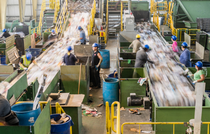
- Sorting machinery and facility design, which depend on local policies, end markets, funding, and material streams.
A Game-Changer for Colorado’s Recycling: Producer Responsibility
Change that will address these inconsistencies is coming to Colorado—and it will make recycling easier, more consistent, and more accessible for everyone in the state.
In 2022, Eco-Cycle helped draft and champion a statewide Producer Responsibility for Packaging and Paper law that will provide universal recycling access to every Colorado household, with rollout beginning this year. Under the new law, recycling will be funded by the manufacturers that create packaging—not by local taxpayers.
The law also establishes statewide recycling guidelines, replacing the patchwork of recycling guidelines that previously varied from one community to the next. That means clearer expectations, less confusion, and a system designed to work for all Coloradans.
Colorado’s New Recycling System Supports a Circular Economy
Colorado’s Producer Responsibility law supports a recycling system that is accessible, consistent, and funded—building toward a more circular economy designed to prevent waste and keep natural resources in use. Key elements of this new system include:
1. Universal Access to Recycling
Every household should have curbside or convenient drop-off options, and recycling facilities need upgrades that can process common packaging materials.
2. Producer Responsibility
Manufacturers, not taxpayers, should fund the recycling system required for their packaging. This creates an incentive for companies to design packaging that’s recyclable, reusable, or compostable.
3. Reuse, Refill, and Repair Infrastructure
Reducing waste at the source—through reusable packaging, refill systems, repair services, and durable products—must become part of the mainstream system.
4. Safer, Smarter Packaging
Toxic additives and unnecessary and problematic products should be eliminated, packaging must be designed for recovery, and industries must create recycling markets for their own products.
State Action Drives Change on the Federal Level
Federal policies like the Break Free From Plastic Pollution Act would accelerate this shift nationwide. Meanwhile, state producer responsibility laws—like Colorado’s—are laying the groundwork for what an accessible and equitable recycling system can look like. But recycling shouldn’t depend on your ZIP code. With smart policies, fair funding, and needed infrastructure, recycling can become a consistent, reliable service across the country and a critical, domestic supply chain for our economy.