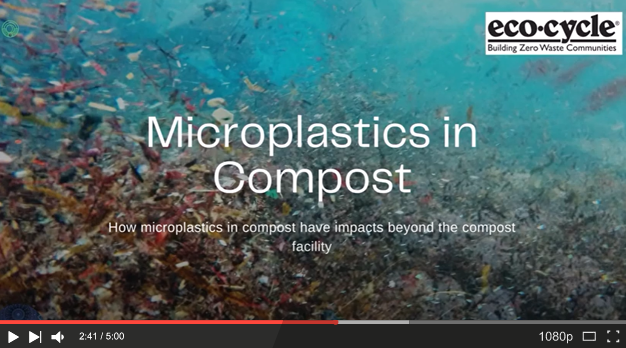










Microplastics Are a Major Source of Plastic Pollution
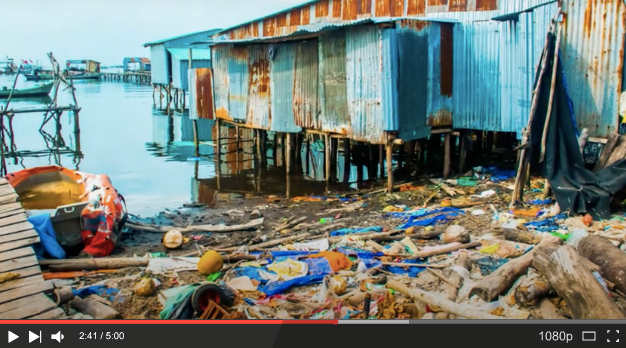
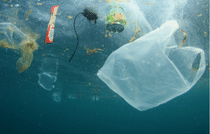
Nearly all plastics are made from fossil fuels. These plastics are not biodegradable, meaning they do not decompose. When plastic objects end up as litter, they break down into tiny pieces when exposed to sunlight and other elements. These tiny particles are called “microplastics,” and they’ve been found in animals, soils, water, and in humans all around the world. According to a study by the University of Newcastle, in Australia, people around the world ingest an average of around 2,000 microplastic particles a week, equivalent to the weight of a credit card.
Microplastics Contaminate Compost
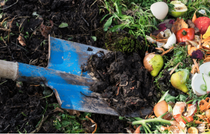
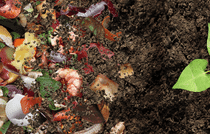
Microfragments of plastic are turning up in our soil, and contaminated compost is one big culprit. Why? Some composting programs in the US and Canada allow residents to include plastic-coated paper products in their compost collection bins—items like milk cartons, coated paper plates, coffee cups, and take-out boxes.
Once composted, these products shed macro- and microfragments of plastic that do not biodegrade and may be ingested by living organisms. Microplastics are known to accumulate persistent organic pollutants that can be transferred to the bodies of living things. We can expect these fragments to persist indefinitely and to be so widely dispersed that it will be impossible to clean them up.
Compost collection programs and compost facilities must exclude plastic-coated paper products from their guidelines to prevent future harm!
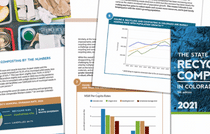
Read more about the research from Woods End Laboratories and Eco-Cycle that shows the plastic coatings on these products break apart when composted but do not disappear and are not biodegraded by microorganisms. Read the full report or the executive summary.
Help keep our soils healthy and microplastic-free!
You can help keep compost clean by consulting your local compost guidelines. As compost facilities across the nation struggle with contamination in compost streams, adhering to local compost guidelines is an important first step. Note that some compost facilities are simplifying what they accept in curbside compost bins to only the most nutrient-rich materials: food scraps and yard trimmings. For example, A1 Organics, the compost manufacturer for Colorado’s Front Range communities, has stopped accepting certified compostable service ware, paper towels and napkins, etc., and are only accepting food scraps or yard trimmings. If your local guidelines DO permit compostable papers, make sure you do not put plastic-coated products in your compost bin. Follow these easy steps:
- Recycle your milk and juice cartons. Carton recycling is available in most communities. Find out if your recycling program accepts cartons.
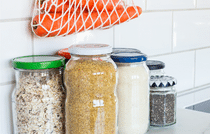
- Avoid plastic-coated paper products. Many of these disposable products can be easily avoided by bringing your own mug or take-out box. Learn more about how to Reduce Your Plastic Use.
- Throw away paper plates, cups, and take-out boxes—even those labeled “compostable.” Believe us, we HATE telling people to throw away anything, but we know it’s better to be safe than sorry when it comes to the future of our soil and our food production system. If you’re not sure if your product is actually compostable, it’s better off in the trash. Compostable service ware and compostable bags larger than 3 gallons—even those labeled as certified compostable by BPI and others—are no longer accepted in compost collection in Colorado’s Front Range communities. Learn more about changes to compost guidelines for Front Range communities here.
We have a Resource Library full of reports, presentations, and more to help you educate your friends, elected officials, fellow businesses, compost facilities, and everyone you know about the risks of plastics in our soil.
Please share these resources far and wide, but please give credit back to Eco-Cycle and Woods End Laboratories. And we’d love to hear from you on what else you could use to spread the word. Let us know.