














Zero Waste and Climate ChangeZero Waste is one of the quickest, easiest and most effective first steps for a community to immediately reduce its GHG emissions.
> Methane is a powerful short term gas > Why it's so important to reduce methane quickly > Why isn't Zero Waste included in climate action plans?
Methane is a powerful short term greenhouse gas
Methane is often cited as 21 times more potent than CO2, and this is also true, but this refers to methane's impact when measured over 100 years. The Intergovernmental Panel on Climate Change (IPCC) calculates the impact of GHG emissions based on three timeframes: 20 years, 100 years and 500 years. Which timeframe a community or a nation chooses to use is a policy decision based on whether they want to emphasize the short or long term. At the Kyoto Protocol, the 100-year timeframe was chosen as the international baseline because climate change was seen as a longer-term threat. Fifteen years later, our climate situation is more dire and immediate than we thought. Now we must cut emissions 80% by 2050, if not significantly sooner. Now we need data to emphasize the short-term impacts of our emissions so we can prioritize reductions to powerful, short-lived gases like methane. We need to look at the impacts of our emissions over the next 20 years if we are going to avoid runaway climate change.
(Source:IPCC, 2007. "Climate Change 2007: The Physical Science Basis, Contribution of Working Group I to the Fourth Assessment Report of the Intergovernmental Panel on Climate Change." Chapter 2: Changes in Atmospheric Constituents and in Radiative Forcing.)
Why it’s so important to reduce methane quicklyMethane only stays in the atmosphere around 8-12 years while carbon dioxide can last for centuries. But methane has a big effect in its short time—methane is responsible for 75% as much warming as carbon dioxide measured over any given 20 years (Watson, 2009). This means methane reductions could have an immediate beneficial effect on our climate, faster than comparable reductions to CO2.
Climate change is happening at an alarming rate. Leading nations are calling for emissions reductions of 80% by 2050 and others are saying we need to reduce emissions much sooner. This means we only have a few decades to act, so we need to concentrate on greenhouse gas reductions that will have an immediate impact. Our short-term climate actions should focus on reducing methane emissions so we can see the quickest benefit.
Why isn’t Zero Waste included on most climate action plans?When the EPA calculates greenhouse gas emissions from waste for our national GHG inventory, they only look at the emissions from landfills and incinerators. But waste isn’t just what happens after you discarded the product—where are the emissions from all the energy and materials used to extract, process and deliver that product to you?
Figure 1 (left) shows the traditional sector-based view of GHG emissions found in our national GHG inventory. Waste isn’t even represented on this chart, which means climate action plans are focusing primarily on reducing transportation and electricity emissions. The emissions from the energy and materials used to extract, process and deliver products to you, those products that then become trash, are embedded into categories like electric power, transportation, and industry.
Figure 2 (right) looks at our emissions from a system-based perspective and shows the way we produce, consume and dispose of our goods and food accounts for 42% of our nation’s greenhouse gas emissions. This means the choices we make about our “stuff” has a bigger impact than driving our car or heating our homes. This new approach is called materials management, and it’s defined by the EPA as “how we manage material resources as they flow through the economy, from extraction of materials and food, production, transport, provision of services, reuse of materials and, if necessary, disposal.” By using this approach to measure our greenhouse gas emissions, we can see the huge impact we can have by recycling more, expanding composting programs, and consuming less. Read the EPA report here.
This doesn’t mean reducing energy use, investing in renewable energy, or changing our transportation habits and technologies aren’t critical—they are! We need to reduce all our emissions substantially over the next few decades, but we haven’t been using all the tools we have to do this, and Zero Waste is an especially important tool because methane is such a powerful short-term gas.
(Chart created by Eco-Cycle based on "Opportunities to Reduce Greenhouse Gas Emissions through Materials and Land Management Practices,” U.S. EPA, 2009.)
Waste and climate on the local levelWhen a local community calculates its greenhouse gas emissions from waste, it uses the First Order Decay (FOD) model for landfills (following IPCC protocol). This model measures only methane emissions that take place within the city limits within a given year. Any greenhouse gas emissions or savings from recycling or composting are not included in this approach, and neither are any emissions that occur outside of the city’s boundaries.
The EPA’s Waste Reduction Model (WARM) calculates the lifecycle GHG emissions from how we manage materials, not just how we manage waste. This accounts for the energy savings from recycling and composting, as well as landfill emissions. Using WARM to calculate emissions from materials management shows the substantial climate benefits from recycling and composting.
Here’s an example of how the two models can give you two different results:
Local communities are missing the connection between their materials management choices and the climate because they’re focused only on the methane emissions from their local landfill. We all share one climate so emissions anywhere will affect all of us. This means we need to make decisions that reduce the greatest amount of GHG emissions, regardless of whether they occur at our local landfill or in a tropical forest across the globe. Local communities need to use WARM to make the right decisions about materials management so they see the total climate impact of their local actions. What can you do1. Get involved with your community climate action plan. Promote recycling and composting as a proven, short-term strategy to reduce greenhouse gas emissions.
2. Calculate your local emissions based on their 20-year climate impact. Highlight the potency of methane. This e-mail address is being protected from spambots. You need JavaScript enabled to view it
3. Use EPA’s WARM to estimate the total climate impact of recycling, composting and waste. Learn more about WARM and see how recycling and composting your discards will help our climate.
Resources for more informationStop Trashing the Climate report
Read more about the report and download the executive summary, full report and more>> COOL 2012 Campaign
Eco-Cycle partnered with BioCycle and the GrassRoots Recycling Network (GRRN) to launch the Compostable Organics Out of Landfills by 2012 (COOL 2012) campaign to show communities they can achieve significant climate benefits RIGHT NOW by PREVENTING landfill-produced methane.
What can your community do? There are four COOL solutions:
Eco-Cycle's Position Paper on the 20-year Climate ImpactBeyond Kyoto: Why Climate Policy Needs to Adopt the 20-year Impact of Methane |


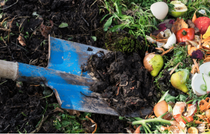
When biodegradable materials such as paper products, food scraps and yard trimming are tossed in the garbage and sent to a landfill, those lettuce heads, grass clippings and paper boxes don’t just break down as they would in nature or in a compost pile. They decompose anaerobically, or without oxygen, and in the process create methane, a greenhouse gas (GHG). Methane is 72 times more potent than CO2 over a 20-year period—this means every one ton of methane will trap as much heat in our atmosphere as 72 tons of carbon dioxide! Landfills are a top source of methane, and one that could be easily avoided if we stopped landfilling organic materials and started composting them instead..gif)
Stop Trashing the Climate


