












Loading
  • GET INVOLVED
  • CONTACT
  • DONATE
  • Play our recycling sorting game!
Button Icon Reuse Hub
  • ABOUT US

    • Our Mission
      • Our Mission, Vision & Theory of Change
      • Our History
      • Alliance for Mission-Based Recycling (AMBR)

    • Our Work
      • Social Enterprise
      • Annual Reports
      • Media Center
      • 50 Years

    • Our People
      • Board of Directors
      • Career Opportunities
      • Volunteer with Us
      • High Five Giving Club

    • Our Policies
      • Justice, Equity, Diversity & Inclusion Mandate
      • Privacy Policy
  • LEARN ABOUT ZERO WASTE

    • Zero Waste 101
      • What Is Zero Waste?
      • What Is Producer Responsibility?
      • Resource Library

    • Zero Waste and Climate
      • Zero Waste Is a Climate Change Solution
      • Why Zero Waste Is Often Left Out of Climate Action Plans

    • Zero Waste Benefits People
      • Zero Waste & Social Justice
      • Jobs & Economic Benefits of Zero Waste

    • Zero Waste Benefits the Planet
      • Pollution & Public Health
      • Zero Waste & Resource Conservation
  • SERVICES & FACILITIES

    • Eco-Cycle Center for Hard-to-Recycle Materials (CHaRM)
      • Microbe Brew Compost Tea
      • CHaRM Fees
      • What We Accept at the Eco-Cycle CHaRM

    • Boulder County Recycling Center
      • Recycling at the BCRC Video
      • General Recycling FAQs for Boulder County
      • What to Recycle in Your Curbside Bin

    • Zero Waste Facilities in Boulder County
      • Hazardous Materials Management Facility
      • Reuse Hub for Boulder & Beyond

    • Zero Waste Hauling & Consulting
      • Zero Waste Hauling
      • Zero Waste Consulting
      • Zero Waste Event Services
      • Zero Waste, Zero Emissions
  • OUR PROGRAMS

    • Reducing Plastics
      • The Global Plastics Crisis
      • Eliminating Problematic Plastics
        • The Most Problematic and Unnecessary Plastics
      • Better Recycling Starts with Better Product Design
      • Producer Responsibility to Reduce Plastics
      • Campaigns & Policies to Reduce Plastics
      • The Problem with Microplastics

    • Composting and Carbon Farming
      • Building a Circular Compost System
      • What Is Carbon Farming?
      • Carbon Farming in Boulder County
      • Microbe Brew Compost Tea
      • What Is Biochar?
      • State & National Efforts
      • Farmers First Compost

    • Zero Waste Colorado
      • The State of Recycling & Composting in Colorado
      • Slashing Landfill Methane Emissions in Colorado
      • Statewide Legislative Campaigns
      • Community Legislative Campaigns
      • Eco-Cycle Municipal Consulting Services
      • Eco-Cycle Municipal Resources
      • The Zero Waste Denver Campaign

    • Creating a Model Zero Waste Community in Boulder County
      • Zero Waste Policies
      • Zero Waste Programs
        • School Programs
        • Eco-Leader Volunteer Network
        • Event Services
  • ECO-LIVING

    • Refuse and Reduce
      • Why Reduce?
      • Reducing Waste Starts at Home
      • How to Stop Junk Mail
      • Reduce Your Plastic Use
      • How to Reduce Food Waste

    • Reuse, Repair, and Share
      • Reusables as a Solution to Single-Use Disposables
      • Repair Resources
      • Reuse and Share
      • Reuse Hub for Boulder & Beyond
      • Zero Waste Holiday Guide

    • Recycling 101
      • Why Recycle?
      • Recycling Myths
      • The Truth About Plastics Recycling
      • Household Hazardous Waste

    • Composting 101
      • Why Compost?
      • How to Compost in Your Backyard
      • Curbside Composting
      • Composting with Worms
      • Winter Composting
      • Microbe Brew Compost Tea
  • GUIDES & RESOURCES

    • Guides for Boulder County
      • Recycling Guide
      • Composting Guide
        • Changing Compost Guidelines
        • FAQs About New Compost Guidelines
        • Clean Compost Campaign Toolkit
      • Reuse Hub for Boulder & Beyond
      • Boulder U-Fix-It Clinic
      • Hazardous Waste Guide

    • Research and Reports
      • State of Recycling and Composting in Colorado 2025 Report
      • Composting in Denver Report
      • AMBR Chemical Recycling Report
      • Microplastics in Compost Report
      • More Reports

    • Resource Library
      • Guidelines
      • Videos
      • Toolkits
      • Fact Sheets
      • Presentations

    • Popular Tools
      • Recycling Sorting Game
      • The Eco-Cycle Guide
      • How to Stop Junk Mail
      • Zero Waste Schools Activity Guide
      • PPRA Toolkit
      • State of Recycling and Composting in Colorado Report, 2025
      • Routes to Reuse Map

Statewide Legislative Campaigns

Eco-Cycle works at the state level to pass policies to increase recycling, composting, and waste reduction that foster the development of circular economies in Colorado.

Statewide Legislative Campaigns

Eco-Cycle works at the state level to pass policies to increase recycling, composting, and waste reduction that foster the development of circular economies in Colorado.

Statewide Legislative Campaigns

Eco-Cycle works at the state level to pass policies to increase recycling, composting, and waste reduction that foster the development of circular economies in Colorado.

Statewide Legislative Campaigns

  • Eco-Cycle’s Legislative Victories

Creating Systemic Change Through Statewide Policy

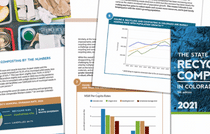
Colorado recycles and composts only 16% of its waste—just half the national average of 32%. To significantly increase Colorado’s waste diversion, we need to change the system. We need to make recycling, composting, and other Zero Waste solutions more accessible and convenient to everyone in the state, regardless of where they live, work, or recreate. The best way to achieve this is to adopt state policies that improve Zero Waste infrastructure, services, and programs, and help develop recycling end markets. 

What We Accomplished During the 2026 Colorado General Assembly

Created a system to collect and recycle electric vehicle batteries: Senate Bill 26-003 passed and signed into law

What happens to those big batteries in electric vehicles (EVs) once they reach the end of their useful life? EV batteries contain valuable materials that can and should be recaptured and reused. As Coloradans increasingly switch to EVs, demand for critical minerals—such as lithium and cobalt—grows to power these vehicles. This law requires car manufacturers to develop a plan to educate the public, collect unwanted EV batteries, and recycle them. SB26-003 establishes a national model that other states could follow, ensuring that valuable minerals are recaptured into the supply chain. The law rightfully emphasizes the reuse of EV batteries prior to recycling, building on existing free-market pathways, and requires battery producers to label EV batteries with information to make them easier to recycle starting in 2028. 

Provided assistance to landfills complying with the methane monitoring rule: Senate Bill 26-101 passed and signed into law

Last year, Colorado approved new regulations to reduce methane and toxic air emissions from landfills. These regulations, which are a big win for public health and our climate, include cost-effective, commonsense standards to modernize how landfills manage methane monitoring, gas destruction, and leak repair. The regulations replace outdated practices with updated standards that reflect current science and modern technology. When first introduced, Senate Bill 26-101 contained language that would have undermined these new landfill methane regulations, circumventing over a year of negotiations to reach consensus and a workable compromise between landfills, local governments, environmental groups, and other impacted communities. Eco-Cycle staff worked with our allies to successfully amend the bill to remove the loopholes for landfills that would have allowed them to avoid compliance. The law now only contains funding opportunities to help landfills comply with the new rule. 

Defended Right to Repair: Senate Bill 26-090 successfully defeated in the House

When consumers’ equipment breaks, we should have the right to fix it—simple as that. Thanks to Colorado’s nation-leading Right to Repair laws, including most recently HB24-1121, we’ve made real progress toward that goal.

SB26-090 threatened to roll back that progress by carving out exemptions for “critical” IT equipment, such as servers and routers. While targeted exemptions for legitimate security concerns may make sense, excluding all servers and routers would undermine the law’s very intent. This bill would have led to higher costs, fewer repair options, and more electronic waste. Eco-Cycle worked hard to fight this effort and protect consumers’ right to repair. Repair is a vital aspect of reuse, both of which lengthen the amount of time products can be used, reducing their environmental impacts. Allied organizations, led by the Colorado Public Interest Research Group (CoPIRG), helped defeat this bill.

Advocated for the elimination of unwanted plastic waste with Skip the Stuff: SB26-146 passed, vetoed by Governor Polis

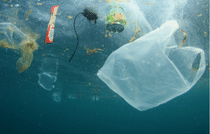
Billions of disposable takeout items are handed out every year—many are never used, yet they still use natural resources to produce, cost money, and create unnecessary waste. Building on lessons from across the US, SB26-146 would have made single-use items available by request only, cutting costs for food businesses, reducing trash, and giving customers more agency over the items they receive. Eco-Cycle supported the bill because it would be a win for restaurants, customers, and the environment.

Unfortunately, Governor Polis vetoed the bill on June 2, 2026, based on two reasons that bill advocates think are unwarranted based on the bill’s language. First, he stated that the decision to implement a single-use serviceware law should be left up to local governments. SB26-146 was intentionally written to create a statewide expectation for food businesses to confirm customers’ desire for single-use items, while allowing local governments the option to choose if they will enforce the law, the same enforcement approach as the Plastic Pollution Reduction Act (PPRA), which Governor Polis signed into law in 2021.

Second, Governor Polis expressed concern that if smaller restaurants that take phone orders forget to ask whether customers want single-use items, customers may be inconvenienced if they do not receive them. SB26-146 would create a consistent expectation, similar to PPRA, through which customers no longer automatically receive single-use bags. SB26-146 would have set a consistent state-level model to drive behavior change for food retailers and customers that would have saved businesses money and reduced unwanted waste for customers. Eco-Cycle will continue to work to find statewide solutions for reducing unwanted plastic waste. 

Worked toward a regenerative, circular, Zero Waste Colorado

In addition to the bills listed above, Eco-Cycle engaged in over a dozen bills this year, including:

  • HB26-1132: Practices to Support Pollinators, passed and signed into law

Eco-Cycle staff testified in support of promoting more native pollinator-friendly plants.

  • SB26-155: Increase Access Homeowner Insurance Enterprise,  passed and signed into law

Eco-Cycle worked with champions to encourage municipalities to adopt ordinances requiring newly built and replaced roofs to use impact-resistant roofing materials to reduce the tremendous amount of hail-caused waste in our state.

  • SB26-016 Prohibit Discharge Preproduction Plastic Materials, passed and signed into law.

Eco-Cycle testified in support of prohibiting the release of plastic pellets and other pre-production plastic materials into the environment (SB26-016).

  • HB26-1111: Pesticide Product Disposal & Container Recycling, passed and signed into law

Eco-Cycle testified in support of this program that will protect our land and water and help farmers safely dispose of unused pesticides so that they can recycle the containers.

  • SB26-065: Systemic Insecticide Use Limitations, postponed indefinitely in Senate Committee on Agriculture and Natural Resources

Though this bill died in committee, we are proud to have supported efforts to reduce the use of neonicotinoid insecticides. We look forward to continuing to engage with the coalition that put this bill forward and with Colorado farmers to build pathways to neonicotinoid insecticides reduction and regenerative agriculture.

Eco-Cycle also supported a handful of bills clarifying Producer Responsibility laws we have helped pass in previous years, so that implementation can continue on schedule.
Related Resources

  • Resources

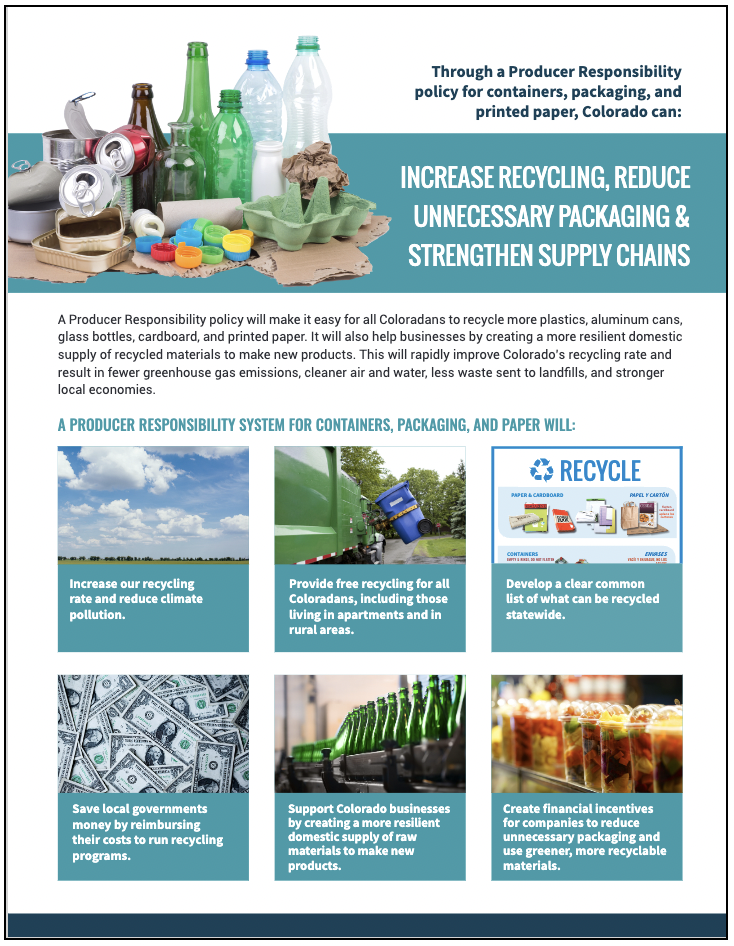
Fact Sheet: Producer Responsibility Will Increase Recycling, Reduce Unnecessary Packaging, and Strengthen Supply Chains

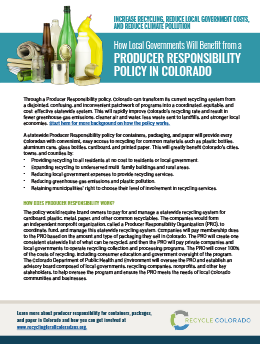
Fact Sheet: How Local Governments will Benefit from a Producer Responsibility Policy in Colorado

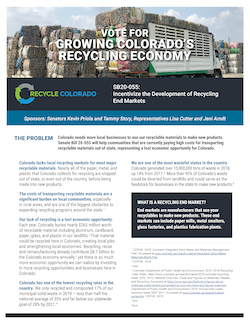
Fact Sheet: Vote for Growing a Recycling Economy in Colorado-SB20-55

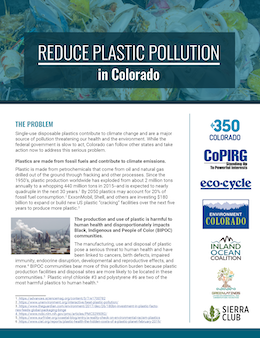
Fact Sheet: Reduce Plastic Pollution in Colorado

See All Resources
Responsive Menu
  • ABOUT US
    ▼
    • Our Mission
      ▼
      • Our Vision & Theory of Change
      • Our History
      • AMBR
    • Our Work
      ▼
      • Social Enterprise
      • Annual Reports
      • Media Center
      • 50 Years
    • Our People
      ▼
      • Board of Directors
      • Career Opportunities
      • Volunteer with Us
    • Our Policies
      ▼
      • JEDI Mandate
      • Privacy Policy
  • LEARN ABOUT ZERO WASTE
    ▼
    • Zero Waste 101
      ▼
      • What Is Zero Waste?
      • What Is Producer Responsibility?
      • Resource Library
    • Zero Waste and Climate
      ▼
      • A Climate Change Solution
      • Left Out of Climate Action Plans
    • Zero Waste Benefits People
      ▼
      • Zero Waste & Social Justice
      • Jobs & Economic Benefits
    • Zero Waste Benefits the Planet
      ▼
      • Pollution & Public Health
      • Resource Conservation
  • SERVICES AND FACILITIES
    ▼
    • Eco-Cycle CHaRM Facility
      ▼
      • Microbe Brew
      • CHaRM Fees
      • What We Accept
    • Boulder County Recycling Center
    • Other Zero Waste Facilities
      ▼
      • Reuse Hub
    • Zero Waste Hauling & Consulting
      ▼
      • Zero Waste, Zero Emissions
  • OUR PROGRAMS
    ▼
    • Reducing Plastics
      ▼
      • The Global Plastics Crisis
      • Eliminating Problematic Plastics
        ▼
        • Harmful Plastics
      • Better Product Design
      • Plastics Producer Responsibility
      • Campaigns & Policies
      • The Problem with Microplastics
    • Composting & Carbon Farming
      ▼
      • A Circular Compost System
      • What Is Carbon Farming?
      • Carbon Farming in BoCo
      • Microbe Brew Compost Tea
      • What Is Biochar?
      • State & National Efforts
      • Farmer First
    • Zero Waste Colorado
      ▼
      • State of Recycling & Composting
      • Slashing Landfill Methane Emissions in Colorado
      • Statewide Campaigns
      • Community Campaigns
      • Municipal Consulting
      • Municipal Resources
      • Zero Waste Denver Campaign
    • Boulder County Zero Waste Model
      ▼
      • Zero Waste Policies
      • Zero Waste Programs
        ▼
        • Schools Programs Overview
        • Eco-Leader Volunteer Network
        • Event Services
  • ECO-LIVING
    ▼
    • Refuse & Reduce
      ▼
      • Why Reduce?
      • Reducing Waste Starts at Home
      • How to Stop Junk Mail
      • Reduce Your Plastic Use
      • How to Reduce Food Waste
    • Reuse, Repair & Share
      ▼
      • Reusables as a Solution
      • Repair Resources
      • Reuse and Share
      • Reuse Hub
      • Zero Waste Holiday Guide
    • Recycling 101
      ▼
      • Why Recycle?
      • The Truth About Plastics Recycling
      • Recycling Myths
      • Household Hazardous Waste
    • Composting 101
      ▼
      • Why Compost?
      • Backyard Composting
      • Curbside Composting
      • Composting with Worms
      • Microbe Brew
      • Winter Composting
  • GUIDES & RESOURCES
    ▼
    • Guides for Boulder County
      ▼
      • Recycling Guide
      • Composting Guide
        ▼
        • Changing Compost Guidelines
        • Compost Guidelines FAQs
        • Clean Compost Toolkit
      • Reuse Hub
      • U-Fix-It Clinic
      • Hazardous Waste Guide
    • Research and Reports
      ▼
      • 2025 SoRC Report
      • Composting in Denver Report
      • Chemical Recycling Report
      • Microplastics in Compost
      • More Reports
    • Resource Library
      ▼
      • Guidelines
      • Videos
      • Toolkits
      • Fact Sheets
    • Popular Tools
      ▼
      • Recycling Sorting Game
      • Eco-Cycle Guide
      • How to Stop Junk Mail
      • ZW Schools Activity Guide
      • PPRA Toolkit
      • SORC Report, 2025
      • Routes to Reuse Map
  • GET INVOLVED
    ▼
    • Volunteer with Us
    • Eco-Leader Volunteer Network
    • Eco-Leader Events Calendar
    • Subscribe
  • CONTACT US
  • DONATE
    ▼
    • High Five Giving Club
  • FOLLOW US

SUBSCRIBE TO OUR NEWSLETTER

A-Z RECYCLING GUIDE


  • PLAY OUR RECYCLING SORTING GAME
  • RESOURCE LIBRARY
  • MEDIA CENTER
  • CONTACT US
  • PRIVACY POLICY

Mailing Address:
P.O. Box 19006
Boulder, CO 80308

Office & CHaRM Address:
6400 Arapahoe Rd.
Boulder, CO 80303

Recycle Hotline:
303.444.6634